
No products
CORONA
- DRONES
- HELIS
- PLANES
- CARS
- BOATS
- SPARE PARTS
- QUAD COPTERS
- MICRO QUAD PARTS
- ALIGN M424 Quadcopter
- Quanum/CX-20/ DJI PARTS
- Cheerson CX-33 Parts
- Cheerson CX-35 parts
- freeX Parts
- SYMA X5 PARTS
- SYMA X8 PARTS
- HUSBAN PARTS
- WLtoys PARTS
- Tarantula X6
- Q-BOT PARTS
- Zoopa Q parts
- Eachine
- VISUO XS809/XS816 parts
- Eachine E58 PARTS / X-PRO
- VISUO XS812 GPS parts
- SHRC H1G GPS PARTS
- Eachine Tyro99
- Wltoys XK X1
- FUNSKY S20 PARTS
- Eachine E520S GPS PARTS
- Eachine E511S GPS PARTS
- Eachine Tyro79 parts
- Eachine EG16 parts
- Eachine Tyro129 parts
- Eachine Tyro109 parts
- Eachine Tyro69 parts
- JJRC X16 5G parts
- Eachine Tyro89 parts
- ΕΛΙΚΟΠΤΕΡΑ
- ALIGN
- ESKY
- E-FLITE
- TAROT (100% COPY ALIGN)
- WALKERA
- Walkera 38 Parts
- Walkera 4-3B/4-3Q2 Parts
- Walkera 5-10 Parts
- Walkera 5-6 Parts
- Walkera 53-1 Parts
- Walkera 5G6 Parts
- Walkera LAMA2 Parts
- Walkera UFO 5 Parts
- Walkera 4G3 Parts
- Walkera Metal Upgrade Parts
- Walkera 5G6-1 Parts
- Walkera 5G4Q3 Parts
- WALKERA 5-4,5,8 PARTS
- Walkera 53Q3 PARTS
- Walkera UFO8 Parts
- Walkera LAMA 400 Parts
- WALKERA LAMA2Q PARTS
- WALKERA LAMA2Q1 PARTS
- WALKERA UFLY
- Walkera 4G6
- SKYARTEC
- SKYA
- Hisky
- Wltoys
- ARK
- HK
- THUNDER TIGER
- GAUI
- ELE
- OUTRAGE
- COPTER X
- HDX
- Copter V-MAX Parts
- Copter Mini X - SH-6025-1
- ACME HELIS
- XK
- Eachine Parts
- XK-WLTOYS
- RC ERA HELIS
- ΑΕΡΟΠΛΑΝΑ
- ΑΥΤΟΚΙΝΗΤΑ
- Accessories
- 1/16 Short Course Truck
- 1/16 Brushless 4WD Racing Buggy
- JJRC Q35/Q36 PARTS
- 9115 parts
- Wltoys A989/A999/L939/K969/K989
- WLtoys A949 A959 A969 A979 PARTS
- Wltoys L959/L969/L979
- Wltoys 144001 parts
- Pxtoys PX9300 1/18
- RC Trailer
- Wltoys 12429 parts
- Eachine EAT04/Feiyue FY01/2/3 1/12 parts
- XLF X03 1/10 PARTS
- Xinlehong 913xx 1/16 PARTS
- Wltoys 12428 parts
- Wltoys 104001 1/10 PARTS
- Wltoys 124017 1/12 PARTS
- Wltoys 124018 1/12 PARTS
- HBX 16886 1/14 4WD PARTS
- HBX 903 RTR 1/12 2.4G 4WD PARTS
- HBX 16889A Pro 1/16 2.4G PARTS
- Wltoys 104009/12402 1/10 PARTS
- Wltoys XK 22201 1/22 parts
- F-20 2.4GHz 1/12 - PARTS
- Wltoys 144010 1/14 PARTS
- Eachine EAT15 Parts
- Wltoys 124010 1/12 PARTS
- Wltoys 284131 1/28 PARTS
- Wltoys 284161 1/28 PARTS
- Wltoys 124008 1/12 PARTS
- Wltoys 284010 1/28 PARTS
- 1/10 HSP PARTS
- Wltoys 184008 1/18 - parts
- WLTOYS 144016 1/14 - PARTS
- BOATS
- BLADES
- RC BEARINGS
- QUAD COPTERS
- RADIOS
- ELECTRONICS
- SPEED CONTROLLERS
- SERVOS
- FPV SYSTEMS
- ΚΑΛΩΔΙΑ & ADAPTERS
- SIMULATORS
- BEC & Regulator
- GADGETS
- ΜΠΟΥΖΟΠΙΠΕΣ
- ΦΩΤΑ & Night Flying
- ACME FlyCams
- ΔΙΑΦΟΡΑ
- BATTERIES & CHARGERS
- MOTOR
- TOOLS-ACCESSORIES
- ΕΡΓΑΛΕΙΑ ΜΕΤΡΗΣΕΩΝ
- ΒΑΛΙΤΣΕΣ
- COVERING FILMS
- ΚΟΛΛΕΣ & ThreadLock
- ΑΕΡΟΓΡΑΦΟΙ
- ΝΤΙΖΕΣ & AΞΕΣΟΥΑΡ
- ΔΙΑΦΟΡΑ ΑΞΕΣΟΥΑΡ
- ΑΞΕΣΟΥΑΡ NITRO
- ΜΠΟΥΖΙ
- ΜΙΖΕΣ
- ΤΡΟΜΠΕΣ ΚΑΥΣΙΜΟΥ
- ΕΡΓΑΛΕΙΑ & ΟΡΓΑΝΑ ΑΚΡΙΒΕΙΑΣ
- ΦΙΛΤΡΑ ΚΑΥΣΙΜΟΥ
- ΒΙΔΕΣ & Washer & E-Clips
- TRAINING KIT
- PITCH GAUGE
- TESTER
- TAPES & VELCRO
- Lubricants & Accessories
- DECALS & STICKERS
- ΕΡΓΑΛΕΙΑ MULTIFUNCTIONAL SKYA
- ΖΥΓΑΡΙΕΣ
- Cleaning Accessories
- Swashplate Leveler
- Starter Shaft
- Glow Ignitors
- DIGITAL MULTIMETERS
- LIGHTNING LED
- SOLDERING IRON
- HAND TOOLS
- DEPRON
- ΚΟΥΤΙΑ ΑΠΟΘΗΚΕΥΣΗΣ
- ΜΠΡΟΣΕΛΕΣ
- ΔΕΜΑΤΙΚΑ
- FOR BEGINNERS
- GADGETS FOR PC
- MAGAZINES & DVD
- SLUBAN BRICKS
- 3D PRINTERS / SCANNERS
- 3D PUZZLES
- ARDUINO - ROBOTICS
- DIY Electronic KIT
 View larger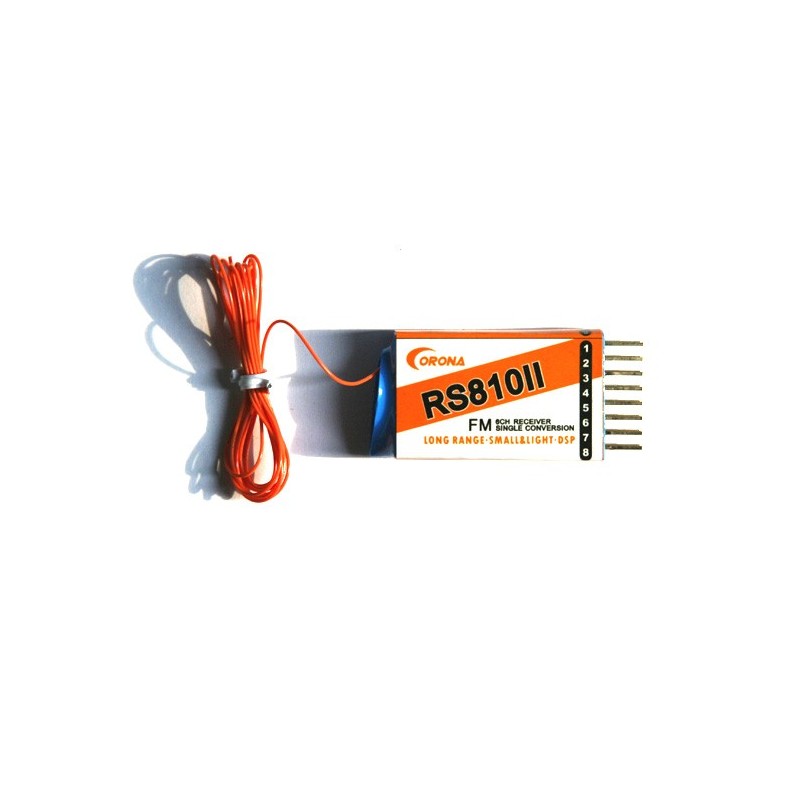
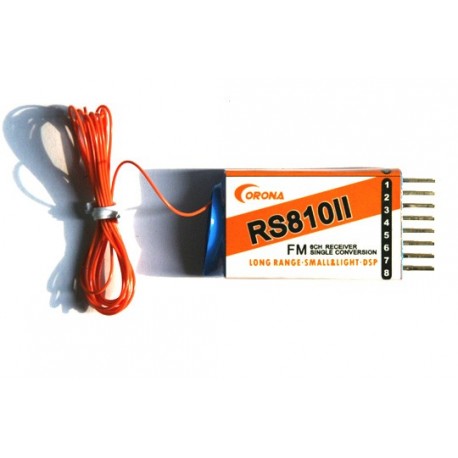
Single Conversion RS810II Receiver 8CH - 35 MHZ
(SKU): RS810II
Single Conversion RS810II Receiver 8CH - 35 MHZ
In stock
More info
| Type: | RS810II |
| Size: | 47X22X9.5mm(1.85"x0.87"x0.37") |
| Weight: | 8g(with shrink wrap) |
| Range: | >1.2km/3900ft |
| Selectivity: | ±8 kHz at 65 dBdown |
| Number of Channel: | 1-8 |
| Filtering: | DSP |
| Crystal size: | UM-5 |
| Intermediate Frequency: | 455KHZ |
| IP3: | +9dBm |
| Operating voltage: | 4.8V-6.0VDC |
| Operating current: | 11mA |
Receiver RS810II
Thank you for purchasing the RS810II receiver - a small and light receiver with high?performance using the latest in receiver technology.
Sensitivity
CORONA never stops improving the receiving range. RS810II has improved the range as far as 1.5Km*
*This range is based on our test conditions. The actual result of a range check will be different depending on your local environment.
Further remote control distance means more reliable control. Even the reliability can compare beauty with PCM receiver. We make control distance be further so that receiver can locate in stable RF Electromagnetic Field, it will make the reliability of Corona receiver approach to PCM receiver. Meanwhile, its response speed will not be influenced.
Selectivity and Dual Ceramic IF filter
The RS810II uses dual tuned RF circuitry with dual ceramic IF filters. Compared to a single ceramic filter, it has a better steep flank which reduces group delay effectively and ensures that the receiver has ultra narrow selectivity to more effectively reject adjacent channel interference. This is especially important when flying indoor airplanes where many transmitters may be operating near each other.
IP3&AGC
With improved circuit design, RS810II advances IP3 performance apparently, and it can even compare beauty with all famous brand receivers around the world. Now RS810II can operate under more 3 adjacent channel transmitters.
DSP
We have also improved DSP algorithm, It can make more strictly filter about received signals and eliminate glitch efficiently.
You can put RS810II receiver in any place when you install it on whatever electric puddle?plane, 3D plane, glider or training plane. And don't worry the trouble which will be brought by changing CG.
Reliability, high performance and sale price, they are what CORONA can provide for you.
no crystal in package
Specifications
Size 36x22x12mm
Weight 7.3g with shrink wrap)
Sensitivity better than 2.0μV
Selectivity ±8kHz at 65dB down
Number of channels 1?4
Filtering Dual turned RF circuitry
Filtering Dual 4 pole ceramic filter
Filtering DSP filtering with mild algorithm
Modulate FM/PPM
Shift polarity Positive or Negative (auto?detect)
Case Shrink wrap
Operating Voltage 4.8V~6.0VDC
Operating Current 11mA.
Installing the RS410II Receiver
1. Plug in crystal.
2. Plug in all the servos/ESC. Pay attention to the polarity of the wire. Please consult the labels on the case for the channel number and polarity.
Caution: If the polarity of the plug is wrong, it will damage the servos/ESC.
3. If not using an ESC with a built?in battery?eliminator circuit (BEC), plug a 4.8V battery/switch harness into any unused channel. If you are using all the channels for servos, use a Y harness to connect the battery and servo to one channel.
4. Wrap receiver in foam rubber to isolate it from vibration.
5. Secure the receiver in aircraft with a rubber band or hook?and?loop fastener.
6. Unwind the antenna fully. Do not coil or cut the antenna.
Quick range checking
Fully collapse the transmitter, antenna and move the transmitter sticks continuously. Ask someone to watch the servos to see whether the receiver has lost the signal. If the receiver does not lose the signal until you are at least 90m (270feet) away from it, it passes the quick range check.
Rigorous range checking
Your local environment can affect the range of the receiver, so quick range checking may not reflect the actual range correctly. If you suspect range problems, perform a rigorous range check.
1. Place the receiver on a non?metallic surface (for example, a wooden bench) which is at least 2 feet (60cm) off the ground.
2. Fully extend the antenna of the receiver and fix it vertically. Don't let it touch the ground.
3. Connect one servo to channel 1.
4. Fully extend the antenna of the transmitter.
5. Turn on the transmitter and then turn on the receiver.
6. Walk away from the receiver while moving the transmitter sticks continuously. Ask someone watch the servo and note any loss of control.
Caution: The range depends on the power of the transmitter, so use a freshly charged transmitter battery. Range checking must be done in an open field to avoid environmental interference. Note that the range in the air will be longer than on the ground.